Virtual Cleanroom Project
Designing the future of virtual cleanrooms for pharmacy professors
For this school project, we worked with Avanade to create design concepts for a virtual cleanroom over a 10-year timespan.

Brief
Avanade wanted us to explore planning for the future state of the service industry.
Solution
A comprehensive 10-year plan for how a professor’s experience can be improved in a virtual cleanroom.
Outcome
Our concepts were shared with a local stakeholder who runs a virtual cleanroom for pharmacy programs.
Individual Contributions
Co-Lead on a team of seven UX Design students, working with Avanade.
Led two interviews.
Led the creation of the creative matrix.
Contributed ideas and sketches for our concepts.
Led the storyboarding activity.
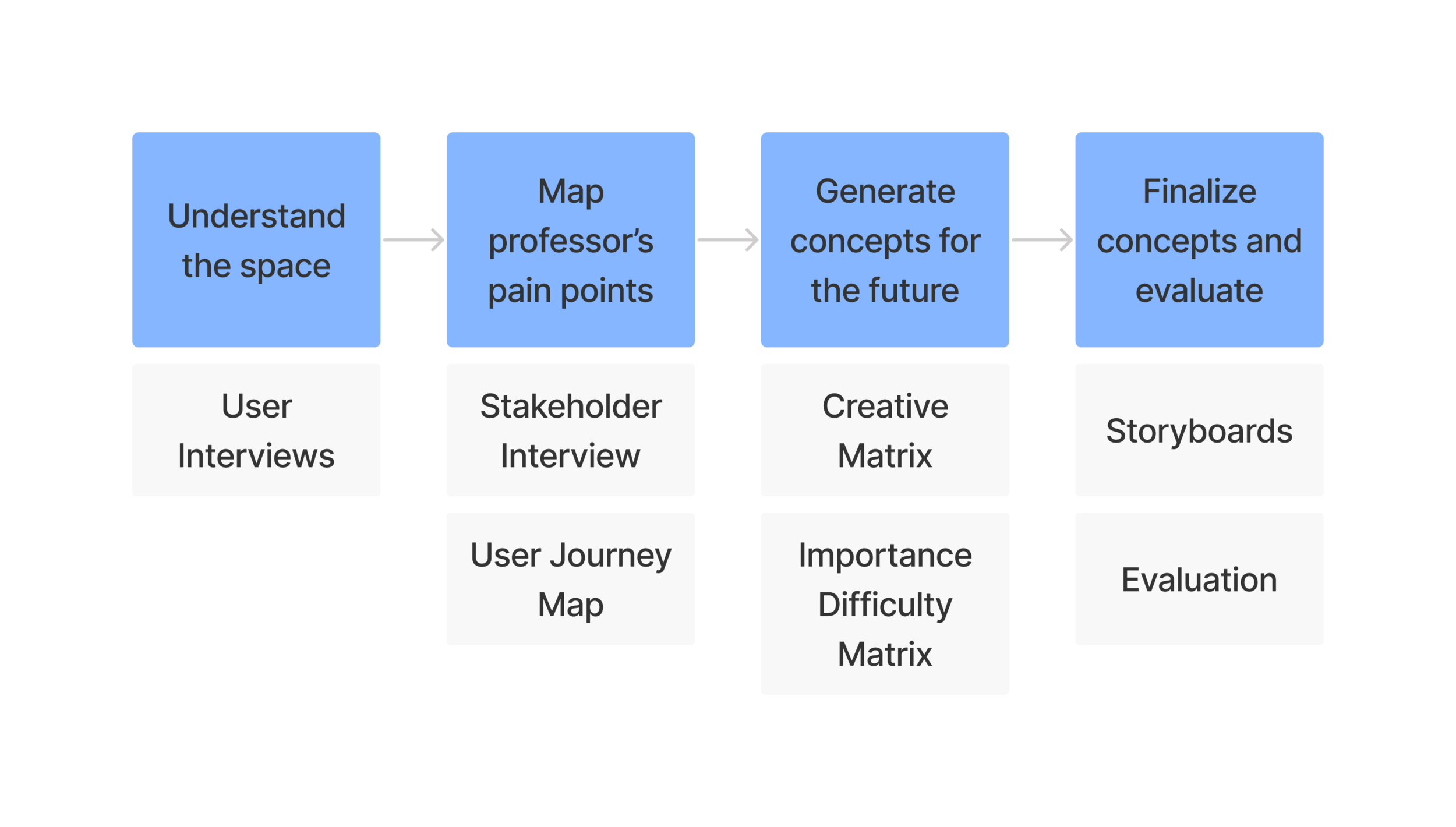
Our Design Process
Interviewing Pharmacy Professors and Students
Talking with pharmacy professors and pharmacy students about how they adapted to the COVID-19 pandemic and virtual teaching helped us understand what issues they faced during that time.
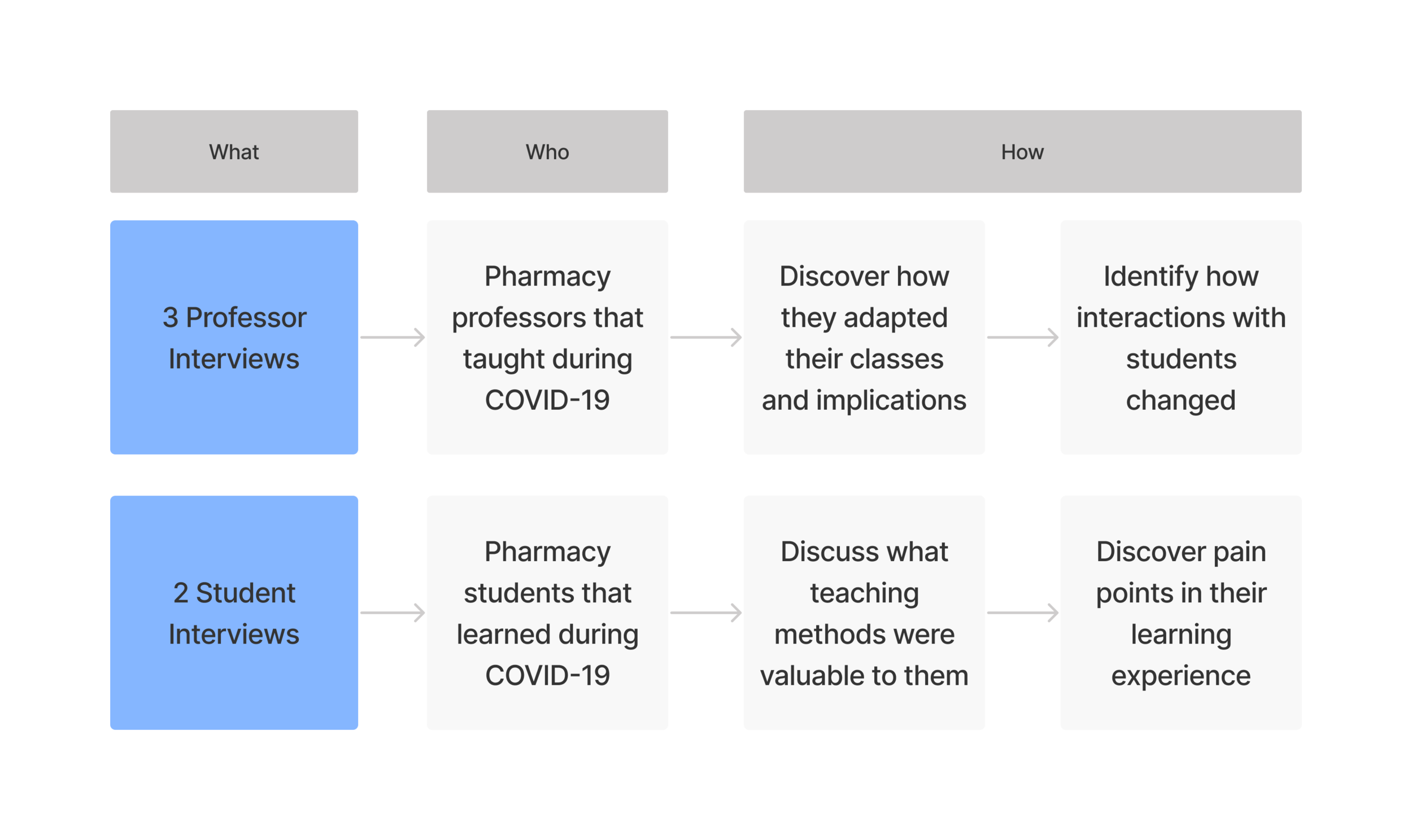
Through these interviews, we learned that professors had to cut the size of their labs in half, reducing student lab experience proportionally. Additionally, professors had a tougher time interacting with students due to much of the teaching being done online.
“The next semester we had to de-densify down to five students [previously ten students] in the pharmacy lab which reduced lab time to one hour [previously two hours]”
“I’m a big people person, not seeing friends, classmates, or faculty was hard and exhausting. It was harder to form new relationships with peers and teamwork and collaborative was harder.”
Stakeholder Interview
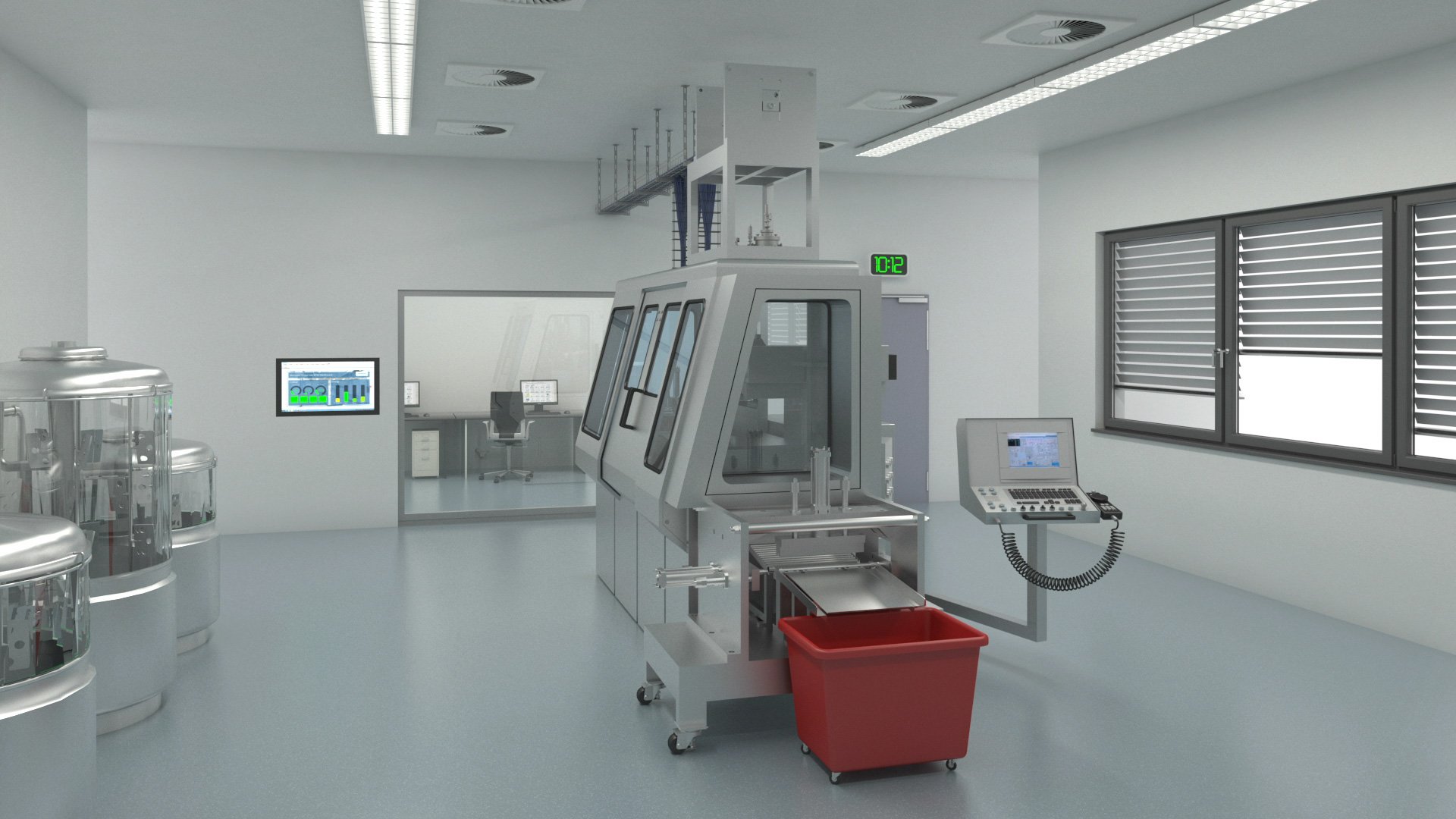
Using the insights we gathered from our interviews, we decided to focus on designing around a virtual simulation program that pharmacy students use to practice creating pharmaceuticals. This led to us interviewing the founder of the program to learn about how it works and how professors use it to teach students.
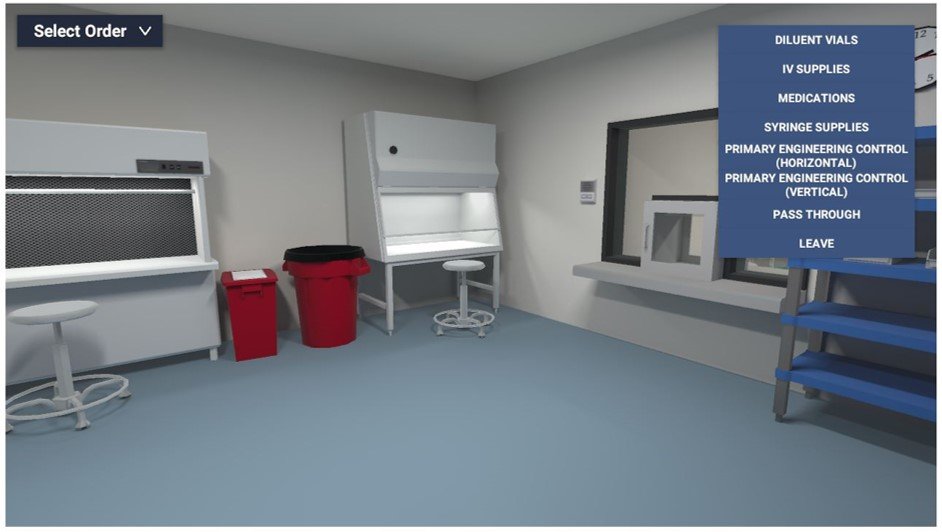
The virtual simulation lab, called “The Virtual Cleanroom”
User Journey Map
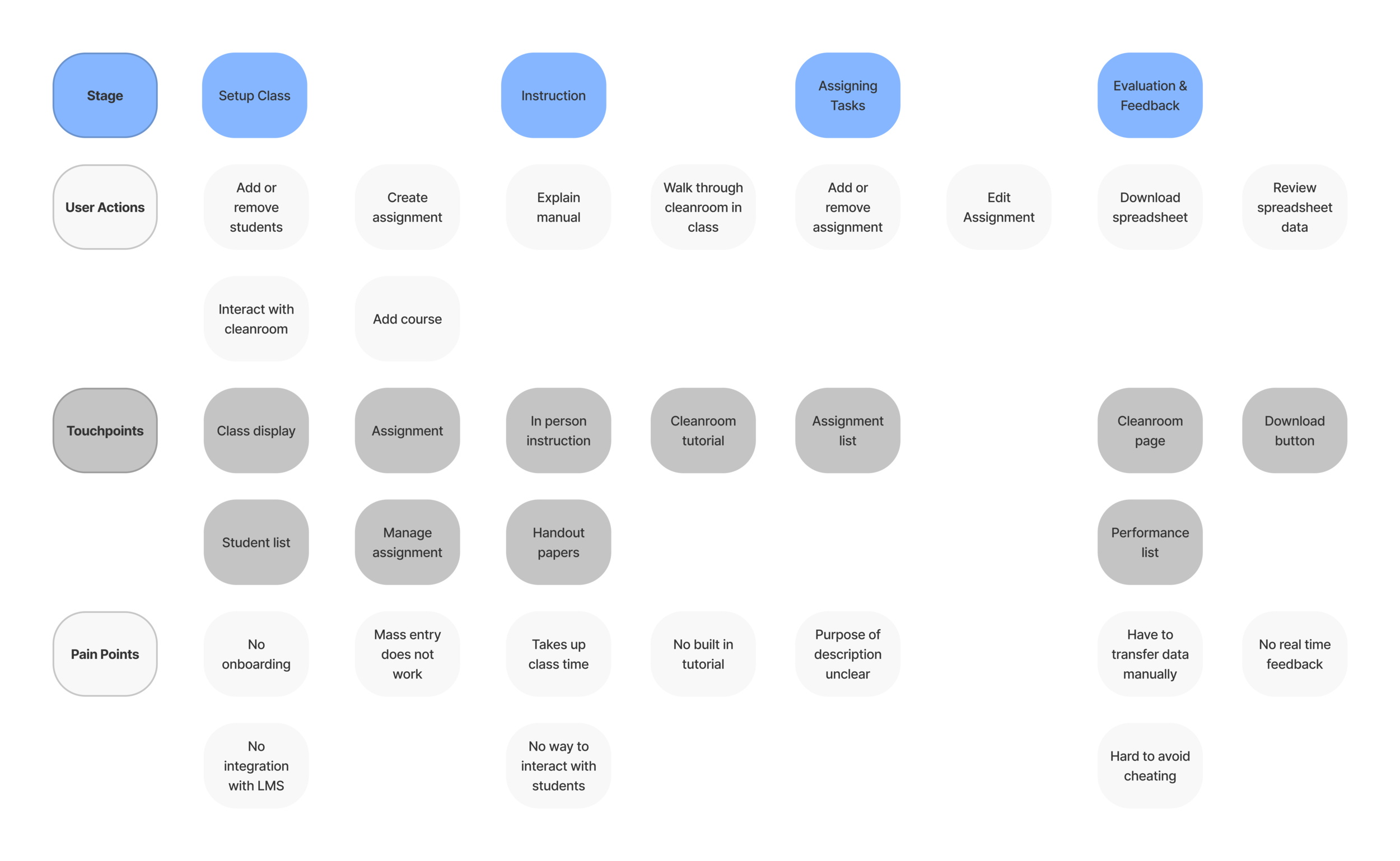
Insights from our user interviews and stakeholder interview helped us put together a user journey map from a professor’s perspective. The journey is based on the professor’s experience using The Virtual Cleanroom and identified where user actions, touchpoints, and pain points are in the journey.
Creative Matrix
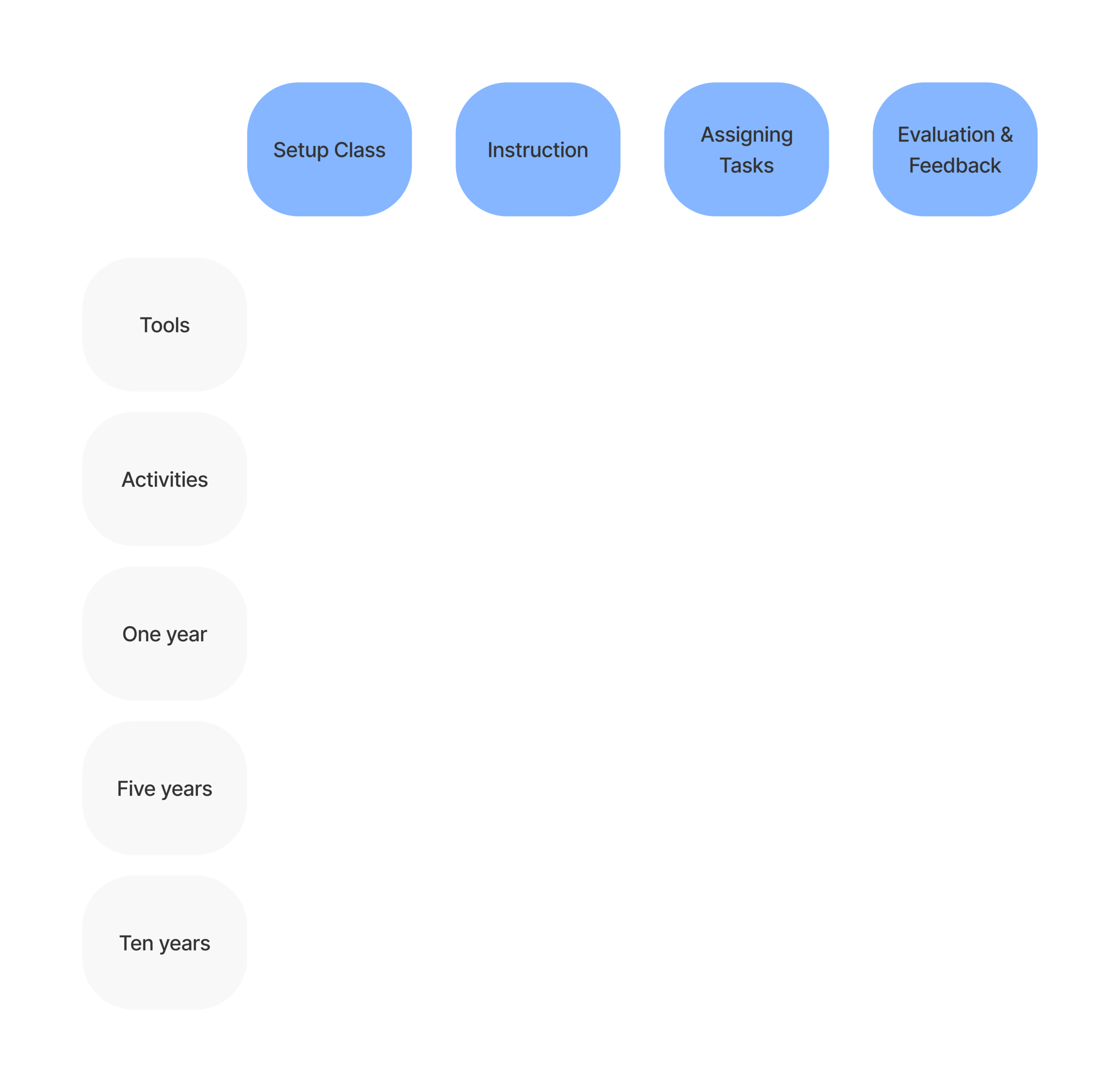
Our creative matrix was organized by the professors journey we defined in our user journey map. We utilized the creative matrix to generate ideas on each step of the journey and how tools and activities in The Virtual Cleanroom could improve in stages of one, five, and ten years.
Importance Difficulty Matrix
To determine which ideas we generated in the creative matrix would have the biggest impact on professor’s experiences, we created an importance difficulty matrix. We rated how difficult it would be to implement the ideas we had vs the quality of life impact it would have on a pharmacy professor.
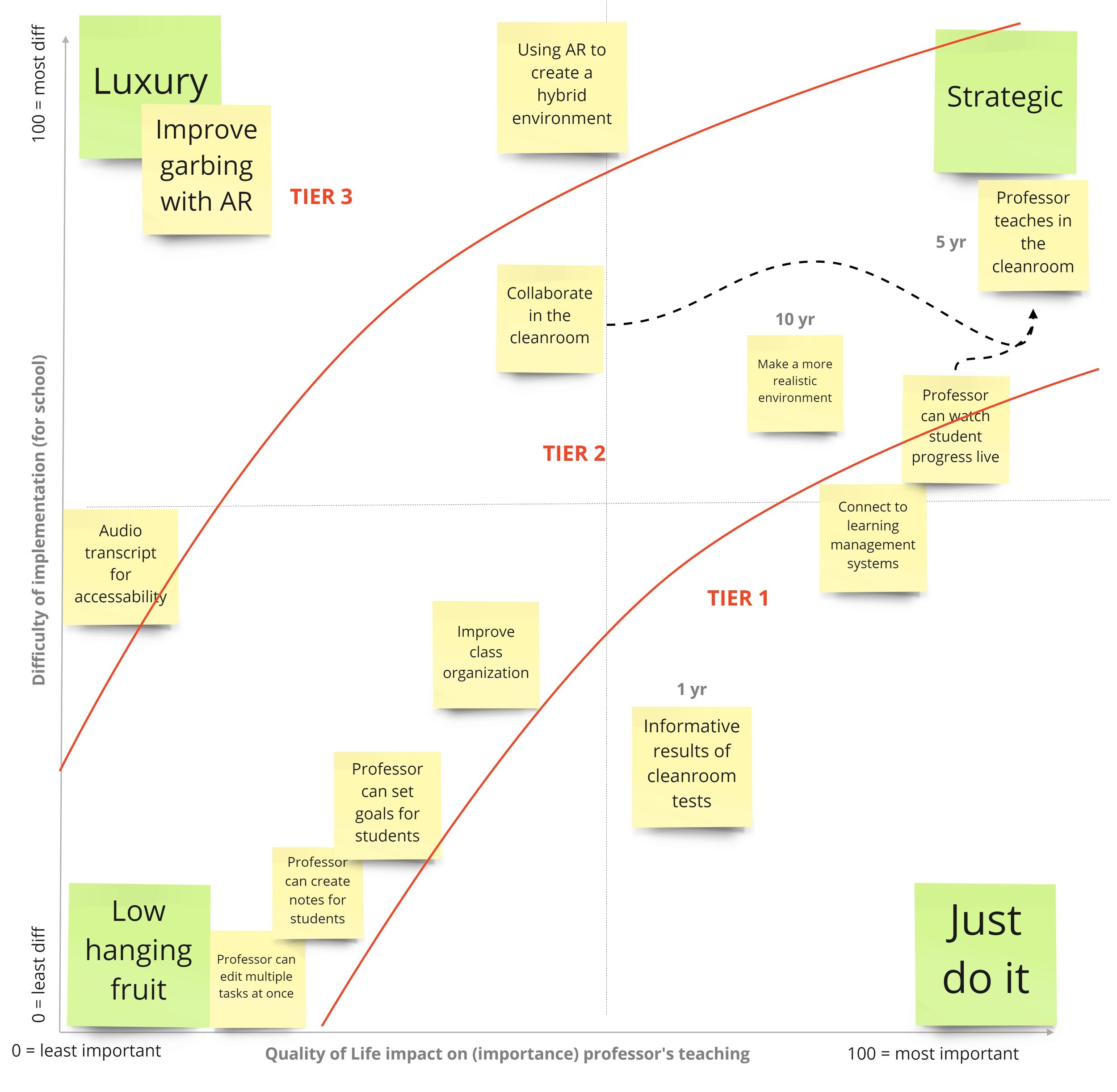
With the creative matrix and importance difficulty matrix, we were able to generate many ideas and narrow them down to form our ten year plan. This is an outline of our ten year plan:
One year: Create more informative results of cleanroom tests.
Five years: Increase collaboration in the cleanroom and allow the professor to teach in the cleanroom live.
Ten years: Make a more realistic environment for teaching real life scenarios.
Storyboards
We created storyboards for each stage of our ten year plan to explain our ideas and how we envision they would improve a pharmacy professor’s experience in The Virtual Cleanroom.
Stage 1: One year
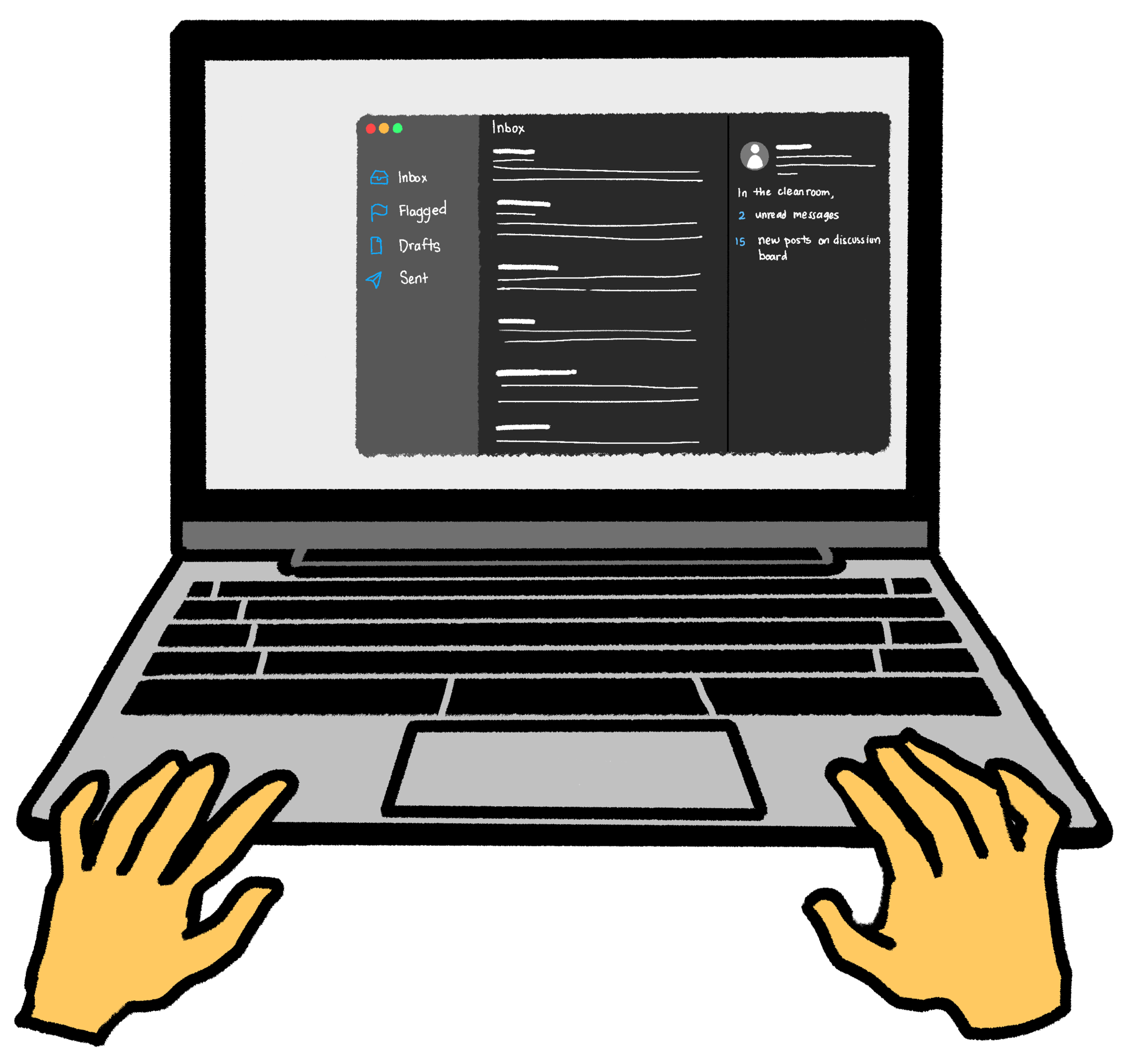
The professor sees emails from students who are having difficulty with a step in the cleanroom.
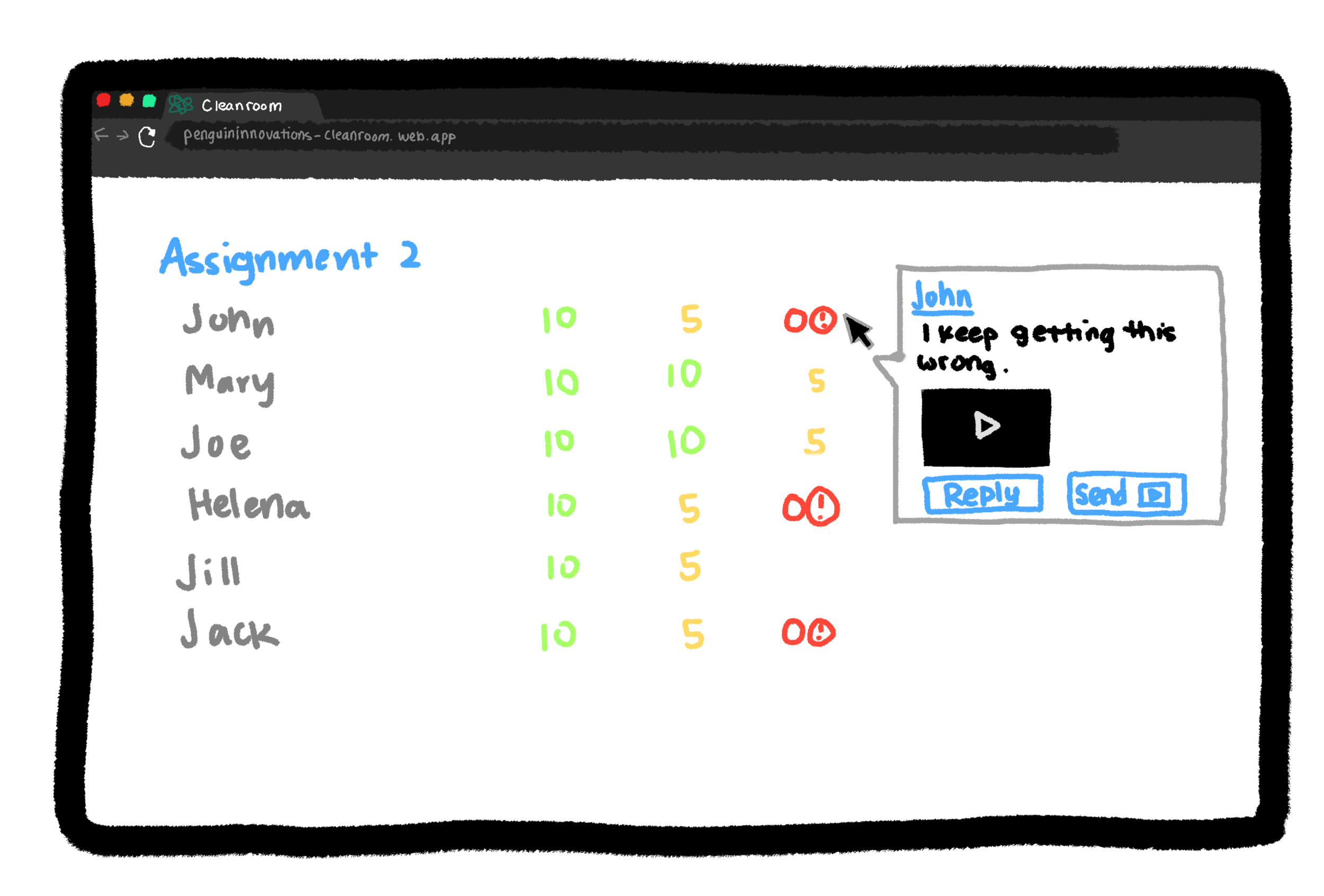
They can go into the cleanroom assignment and see where students are having difficulty.
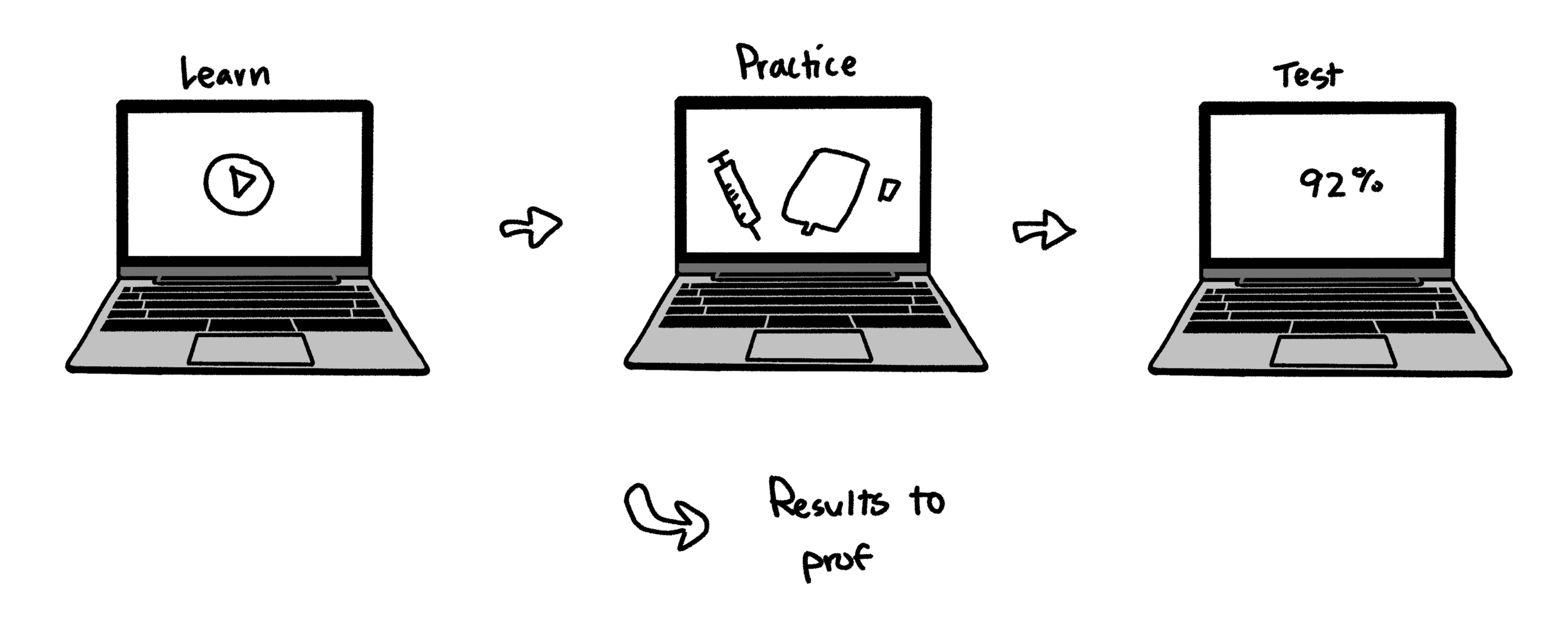
The professor can now see where students are having issues while they are practicing so they can help their students to get better test results.
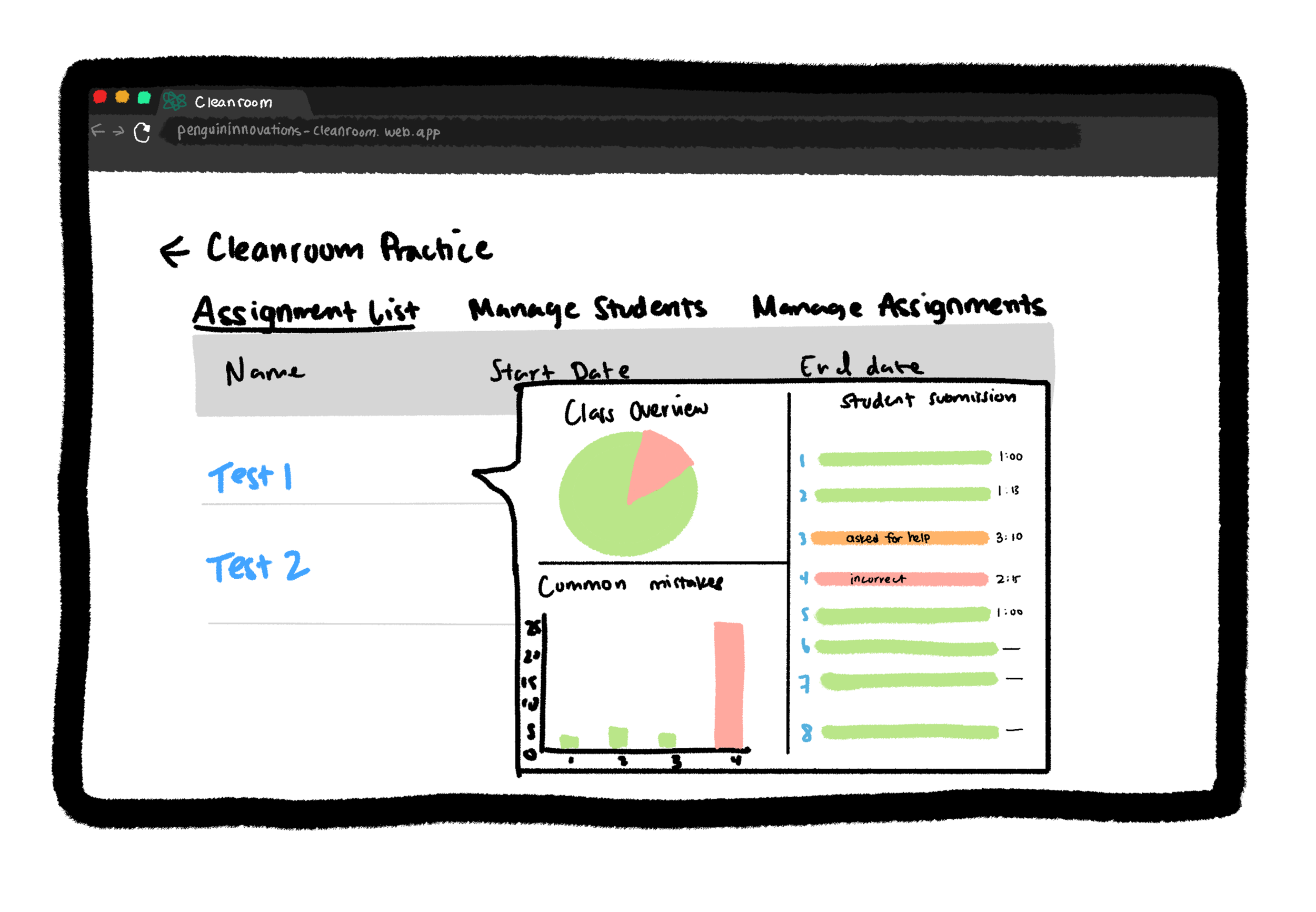
For test results, professors can see more informative results that includes class overviews, common mistakes, and individual student submissions.
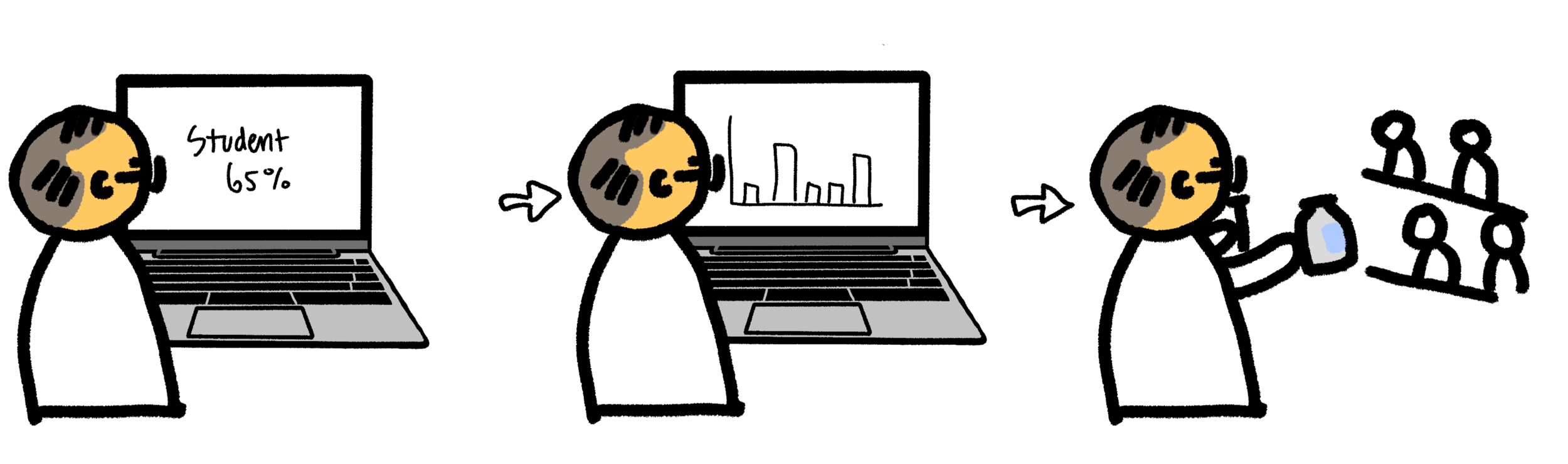
The more informative results allows professors to see where students are having the most issues, guiding class instruction.
Stage 2: Five Years
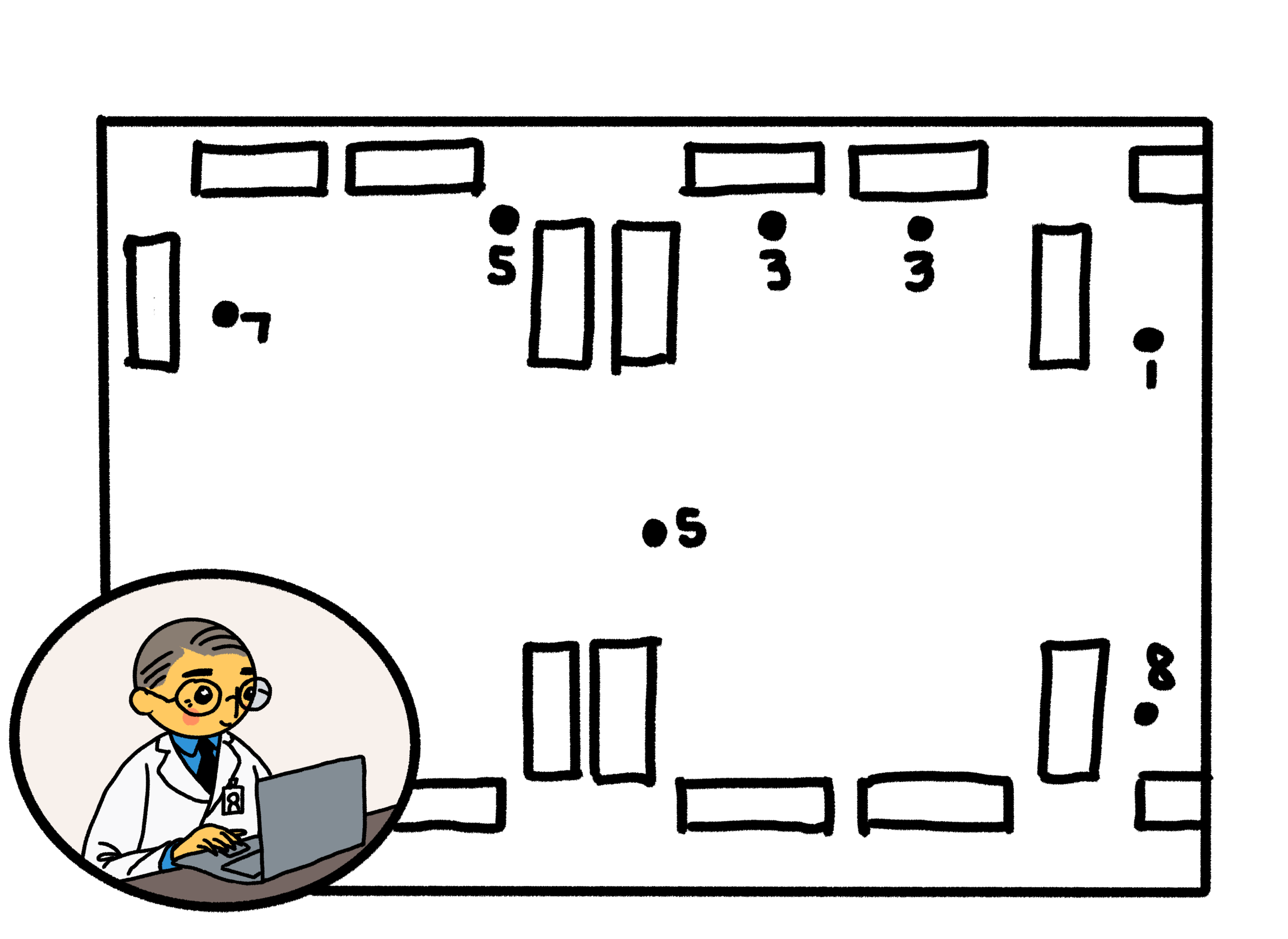
The professor can see all of the students working in the cleanroom and what step each of them are on.
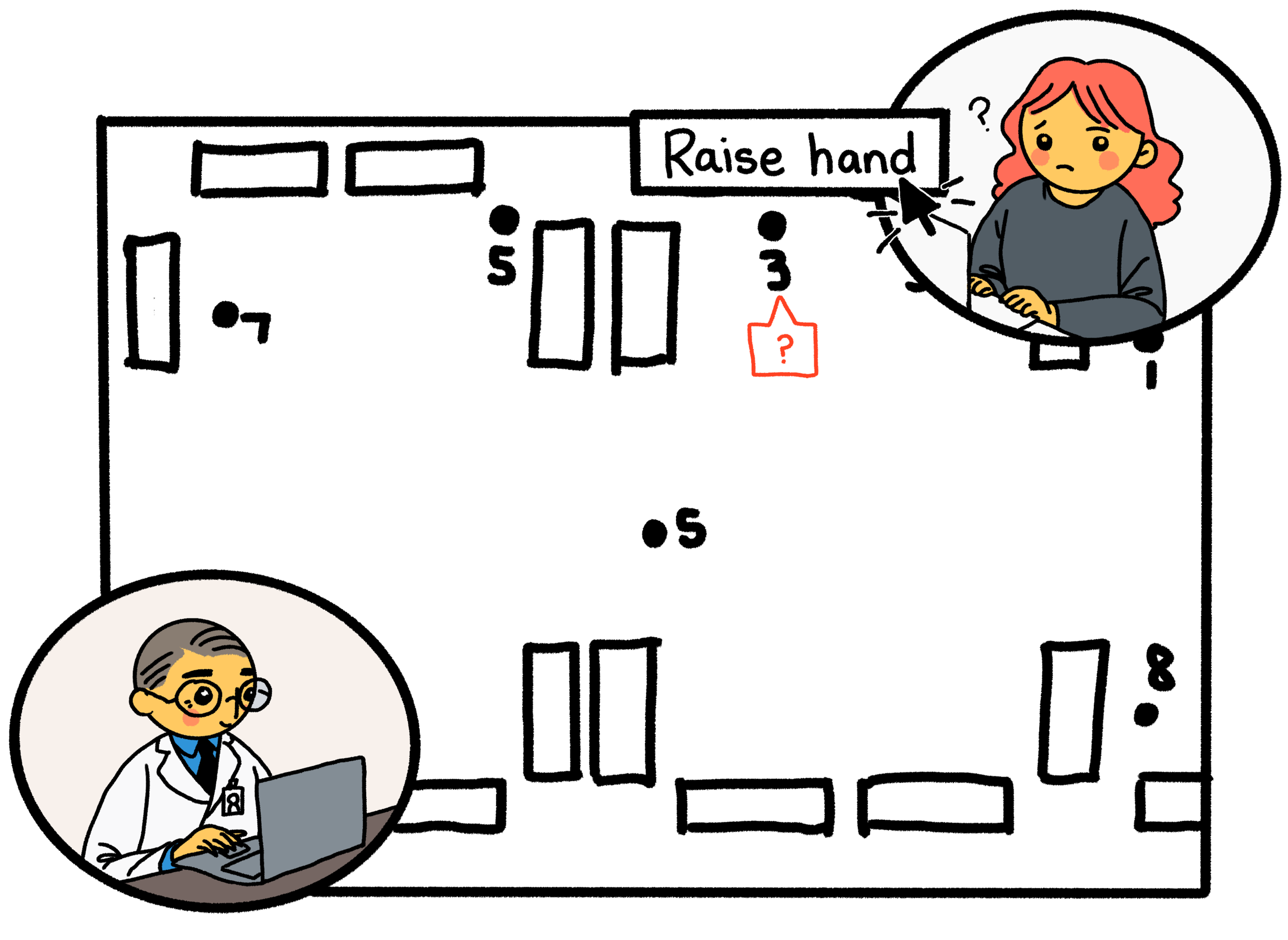
When a student needs help, the professor can see it as a red question mark on their screen.
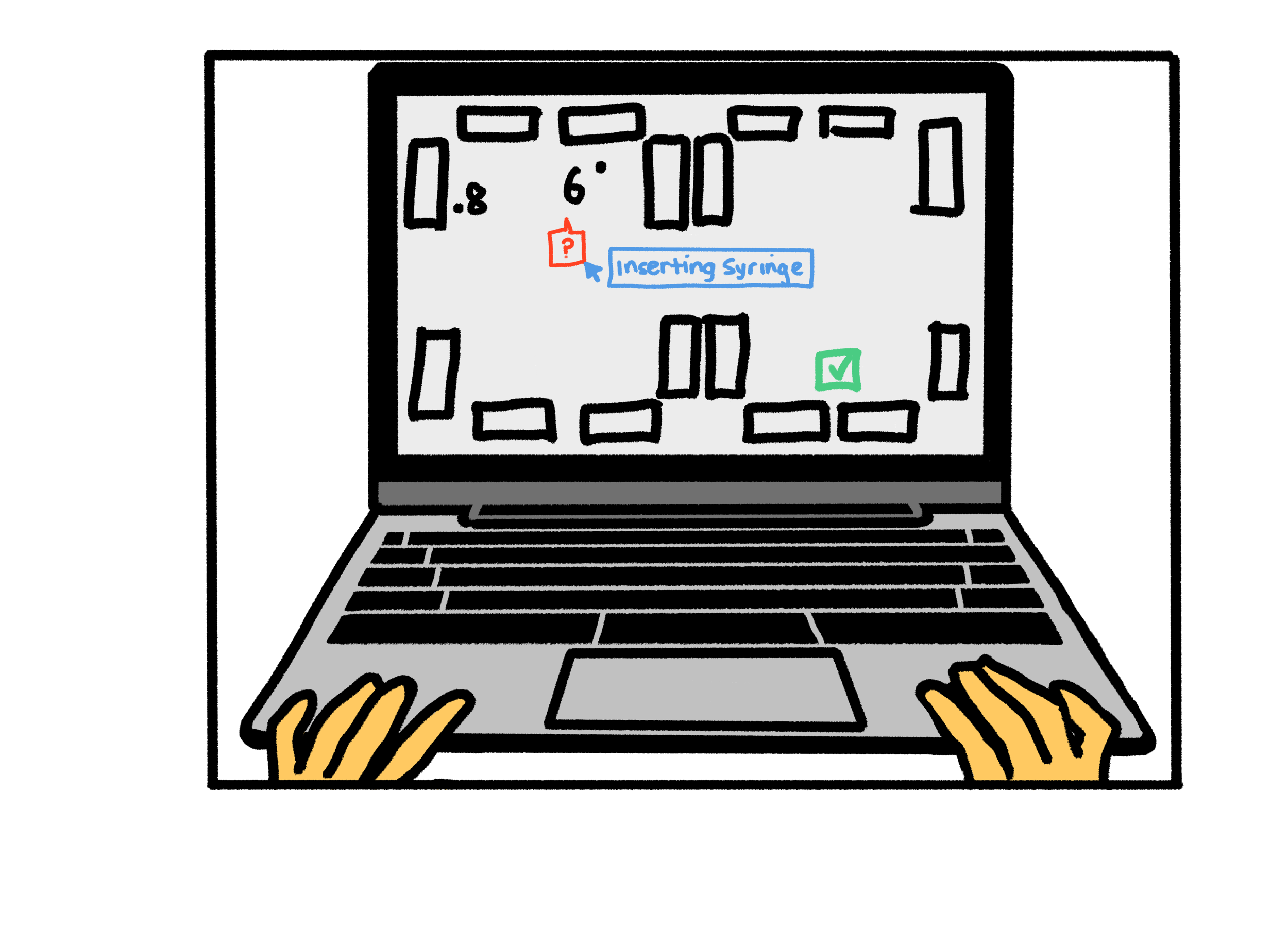
The professor moves their cursor over to the student that needs help and sees they are on the step of inserting the syringe.
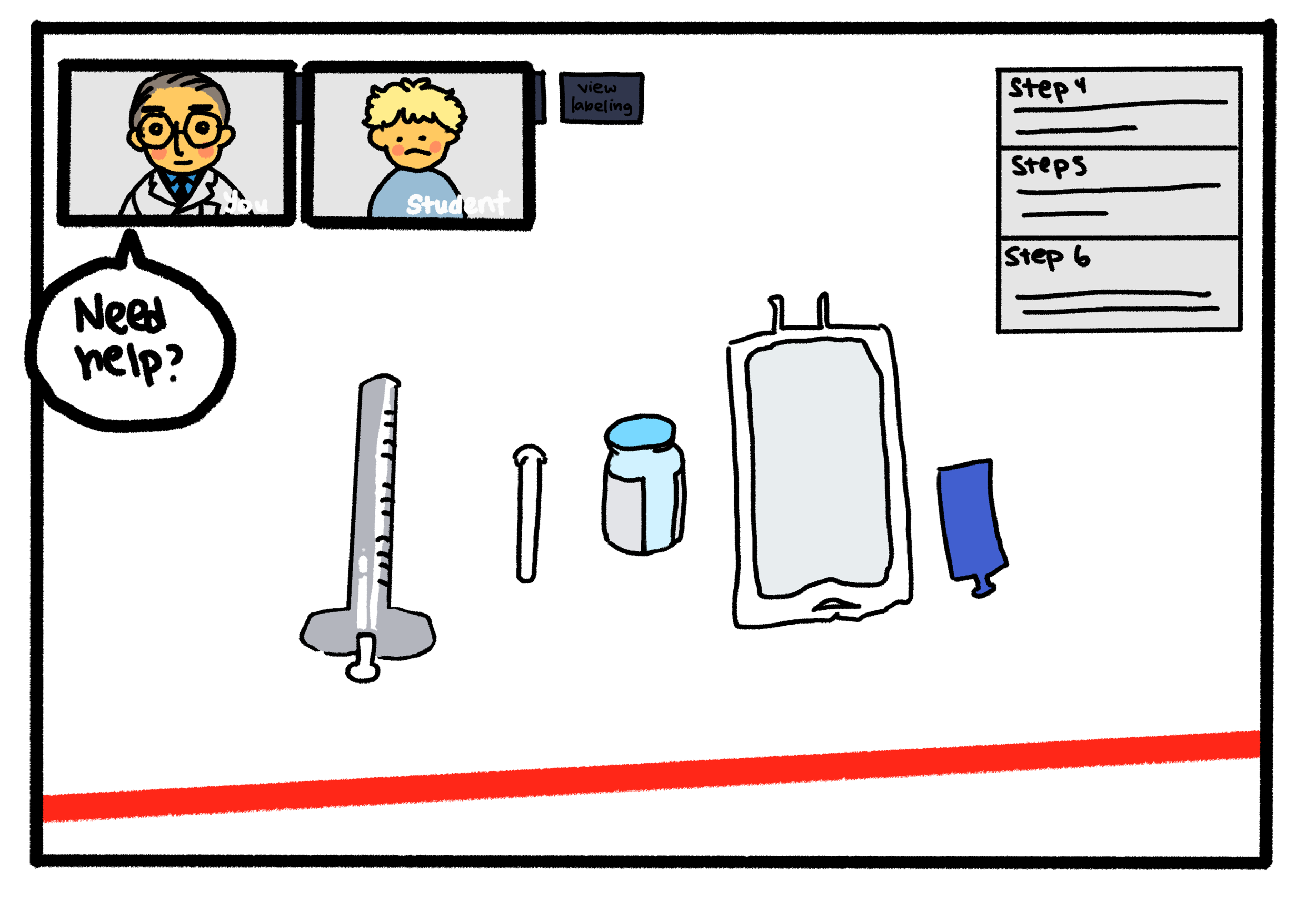
When the professor clicks on the student, they connect with the student through Zoom integration and can see their perspective in the cleanroom to better help them.
Stage 3: Ten Years
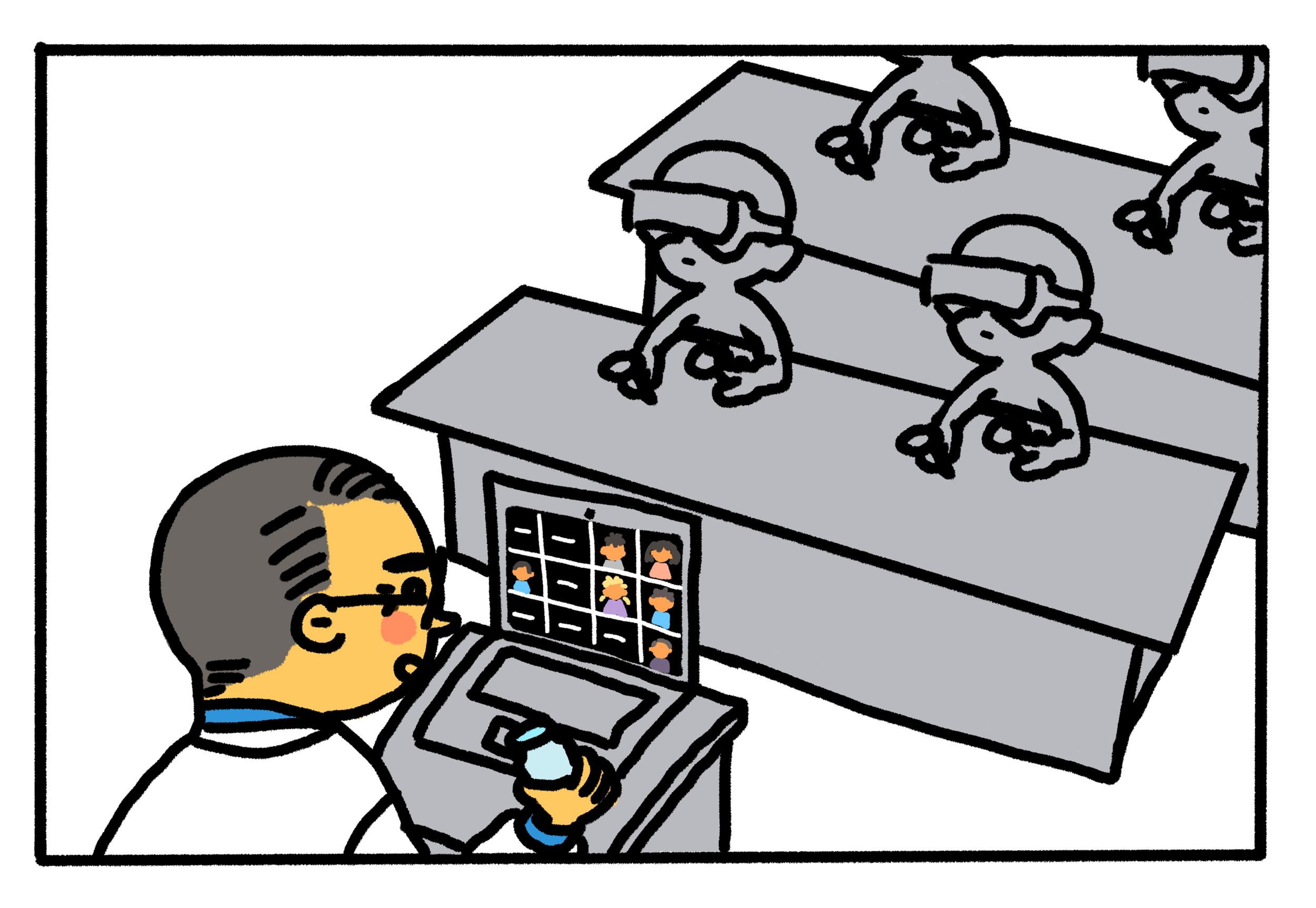
The professor can teach class in a hybrid environment with students in person inside the virtual environment and remote students joining via Zoom.
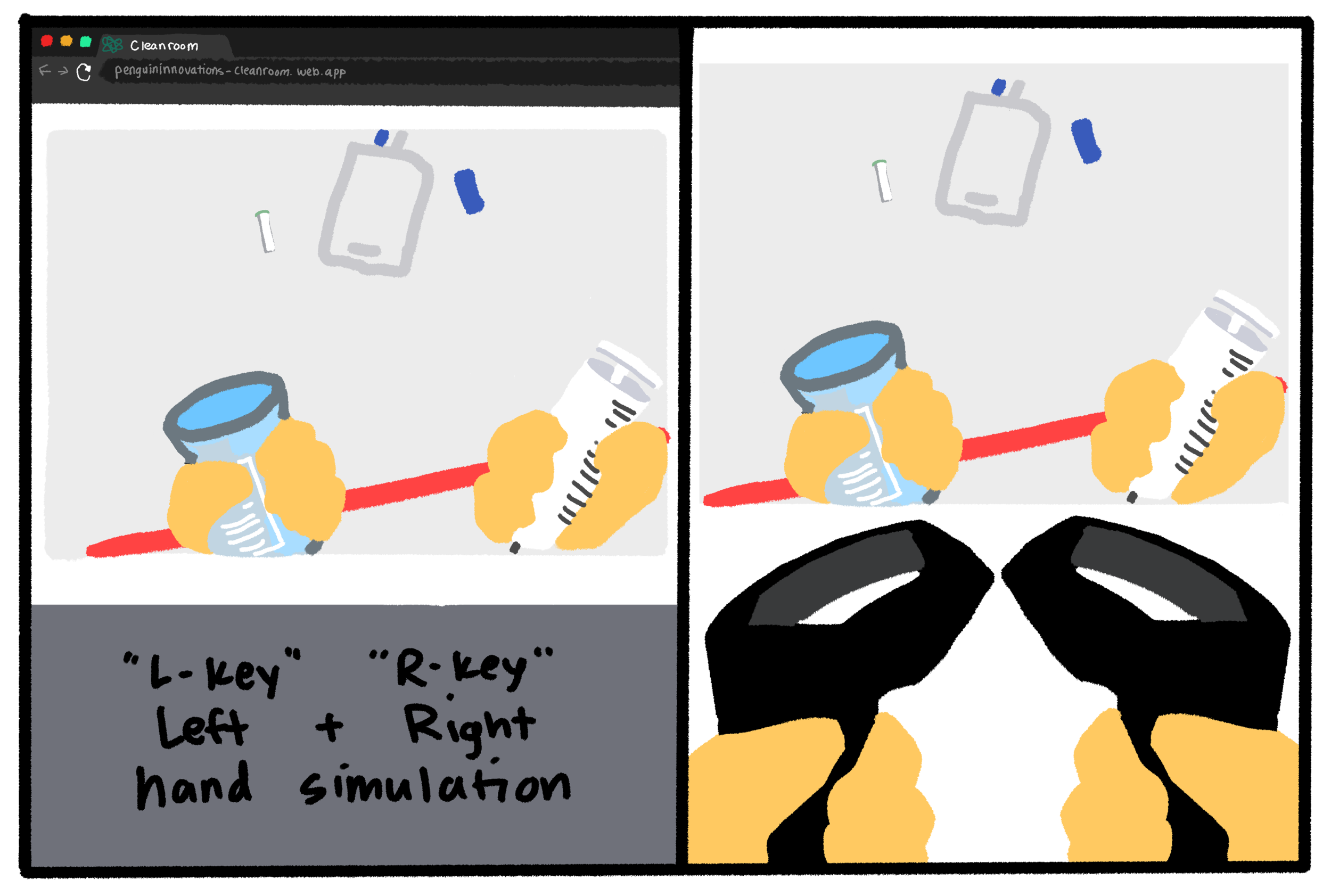
Students joining remotely can use the virtual cleanroom on their personal computers and students in person can go into the virtual environment with VR.
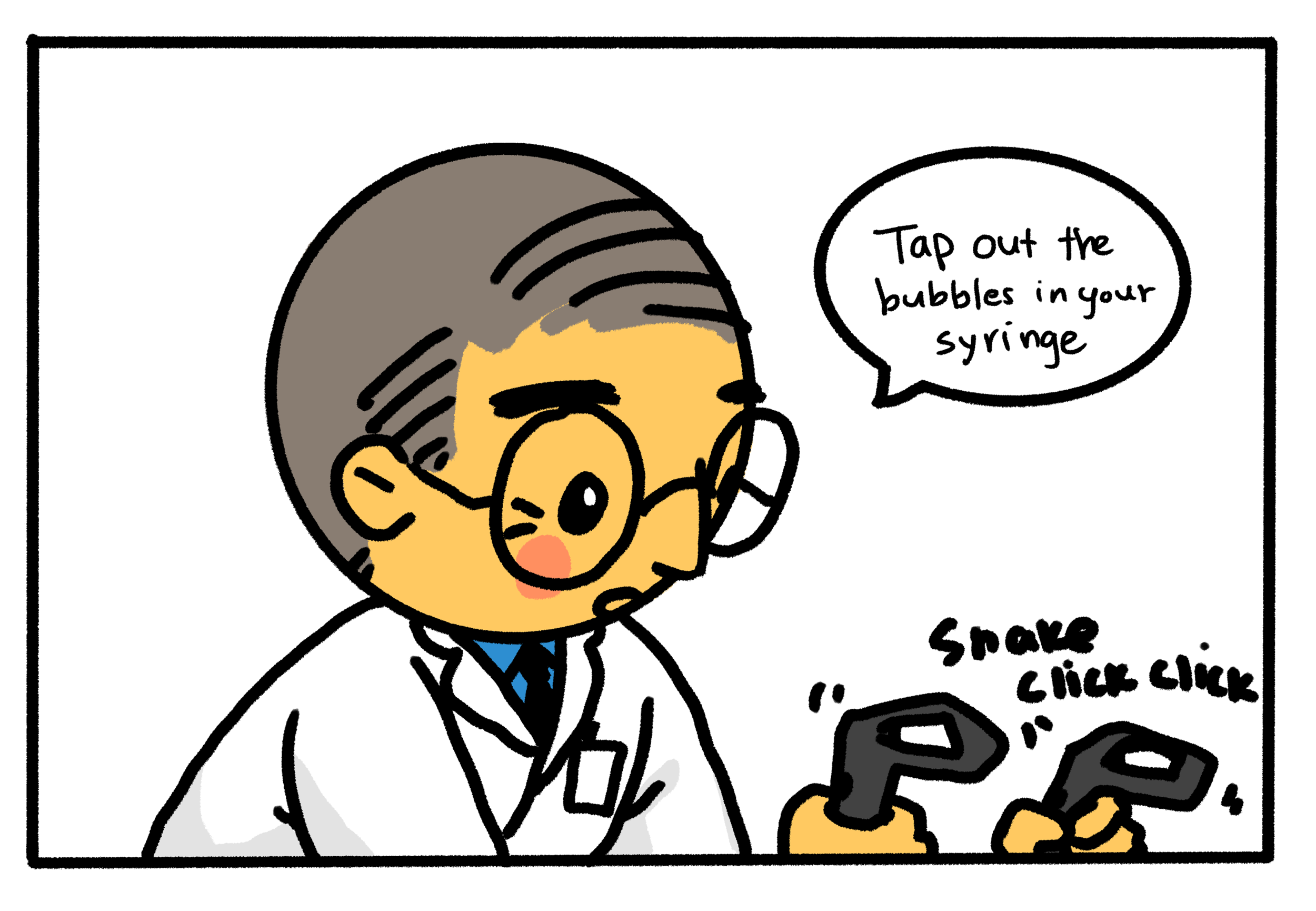
Using this new environment, professors can teach realistic scenarios that sometimes occur in real life, such as bubbles forming inside the syringe.
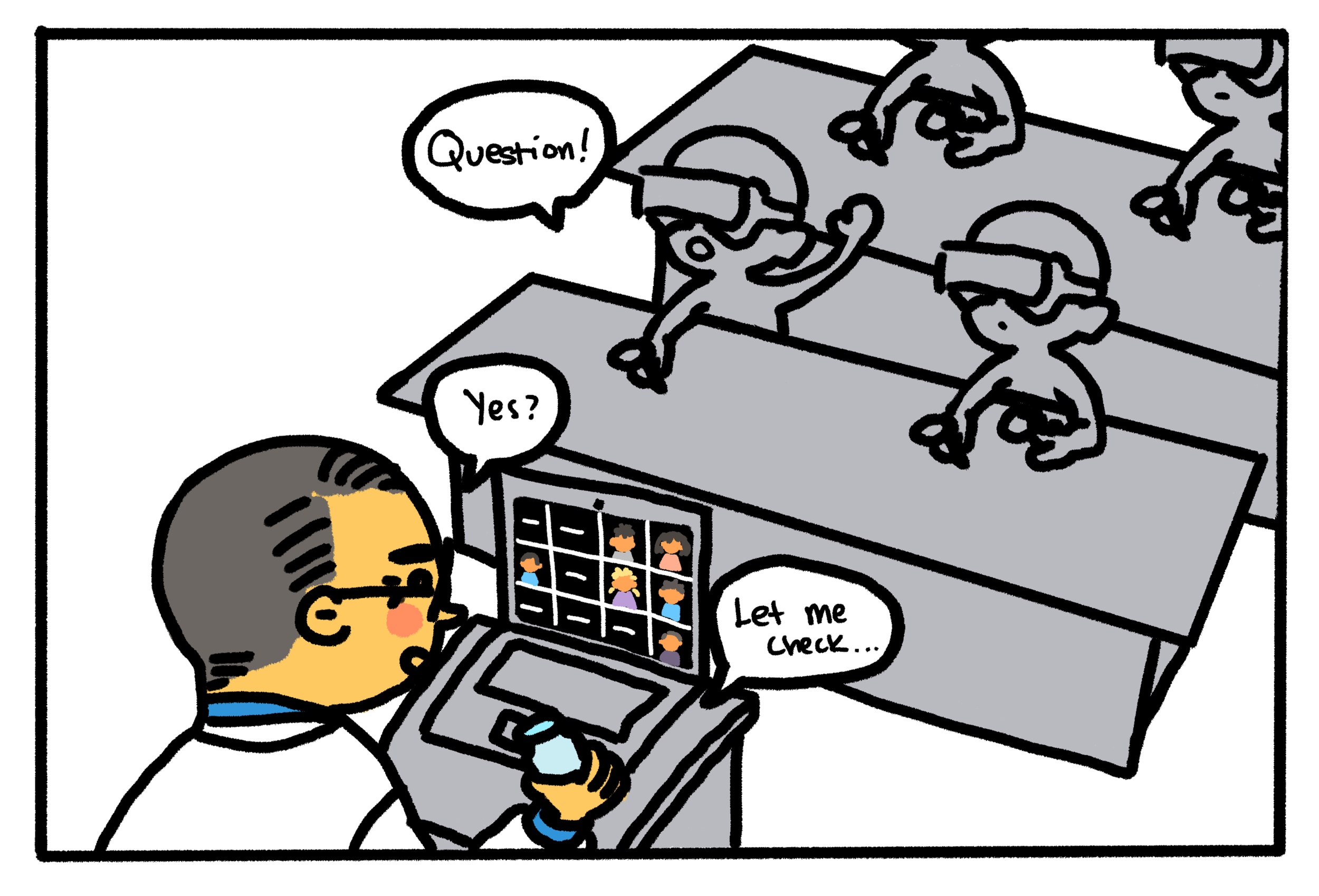
A student raises their hand to ask a question.
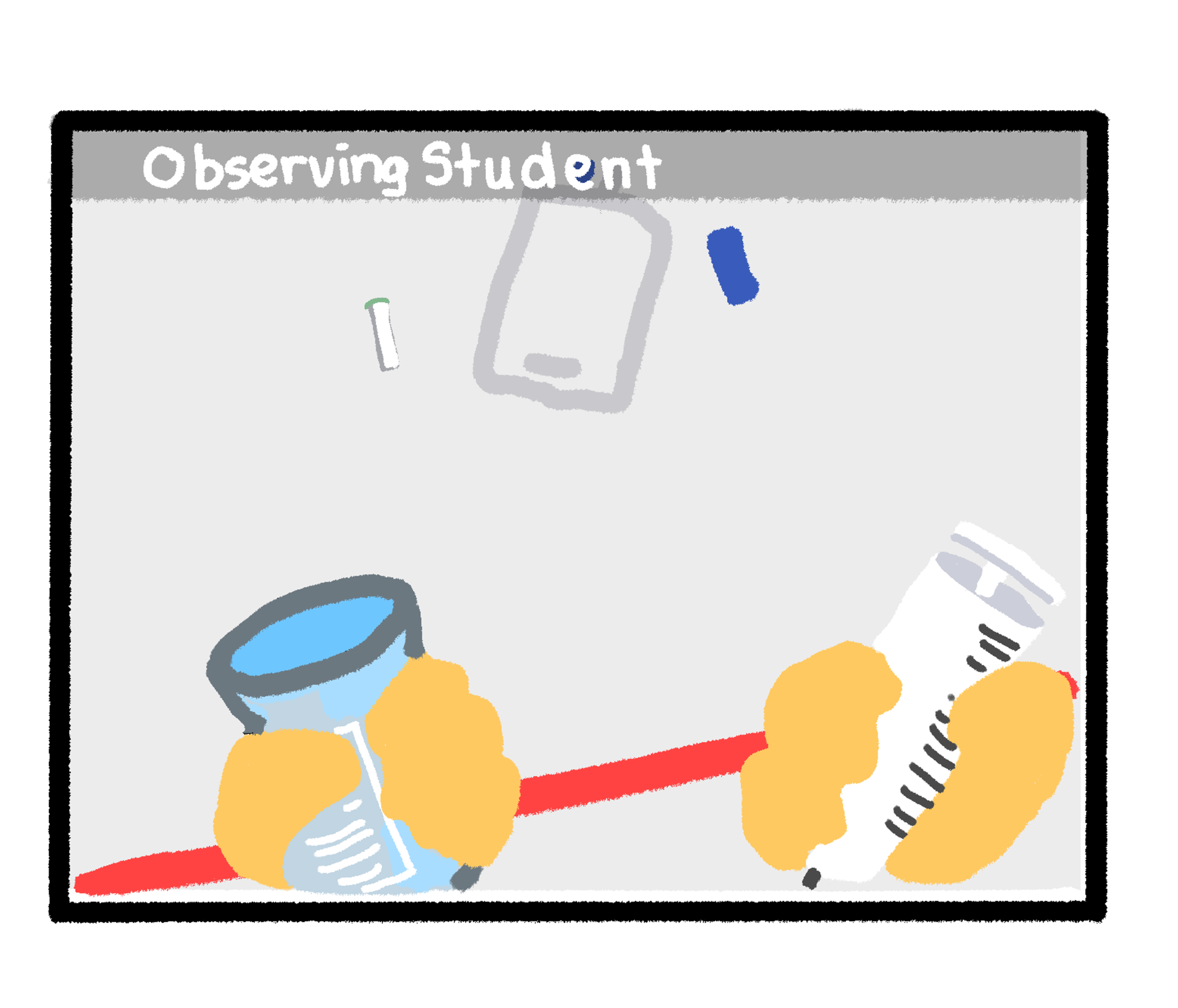
The professor can join the students in the virtual cleanroom to see what exactly they need help doing.
Evaluations
Now that we had finalized our ten year plan, we needed to speak with a professor and stakeholder about our ideas to see where they could be improved. We walked them through the ideas in our storyboards and discussed their thoughts on them. These are some quotes from those interviews:
“Connecting to Brightspace [learning management software] is helpful. Any way to automate grading saves us a lot of time and we can get that feedback to students sooner.”
“The biggest problem would be money. We would need to reach out to AR/VR companies to see how much something like this would cost.”
At this point in the project, we ran out of time to make any iterations, but we would continue exploring the feasibility of our designs and make changes based on the feedback we received.
What I Learned
Through this project, I was able to learn about how professors adapted to the COVID-19 pandemic and ways we could plan for the future in case a shutdown happened again. I learned that it is important to take risks in design to explore as many ideas as possible. I also improved my presentation and leadership skills.