Conversational Influencer Marketing
Role
Product Designer
Defining a New Product for Enterprise Influencer Discovery
Influencer marketing teams were relying on spreadsheets, agency presentations, and manual research to discover and evaluate creators. The process was fragmented, difficult to scale, and made it challenging to quickly identify influencers that matched a campaign's needs.
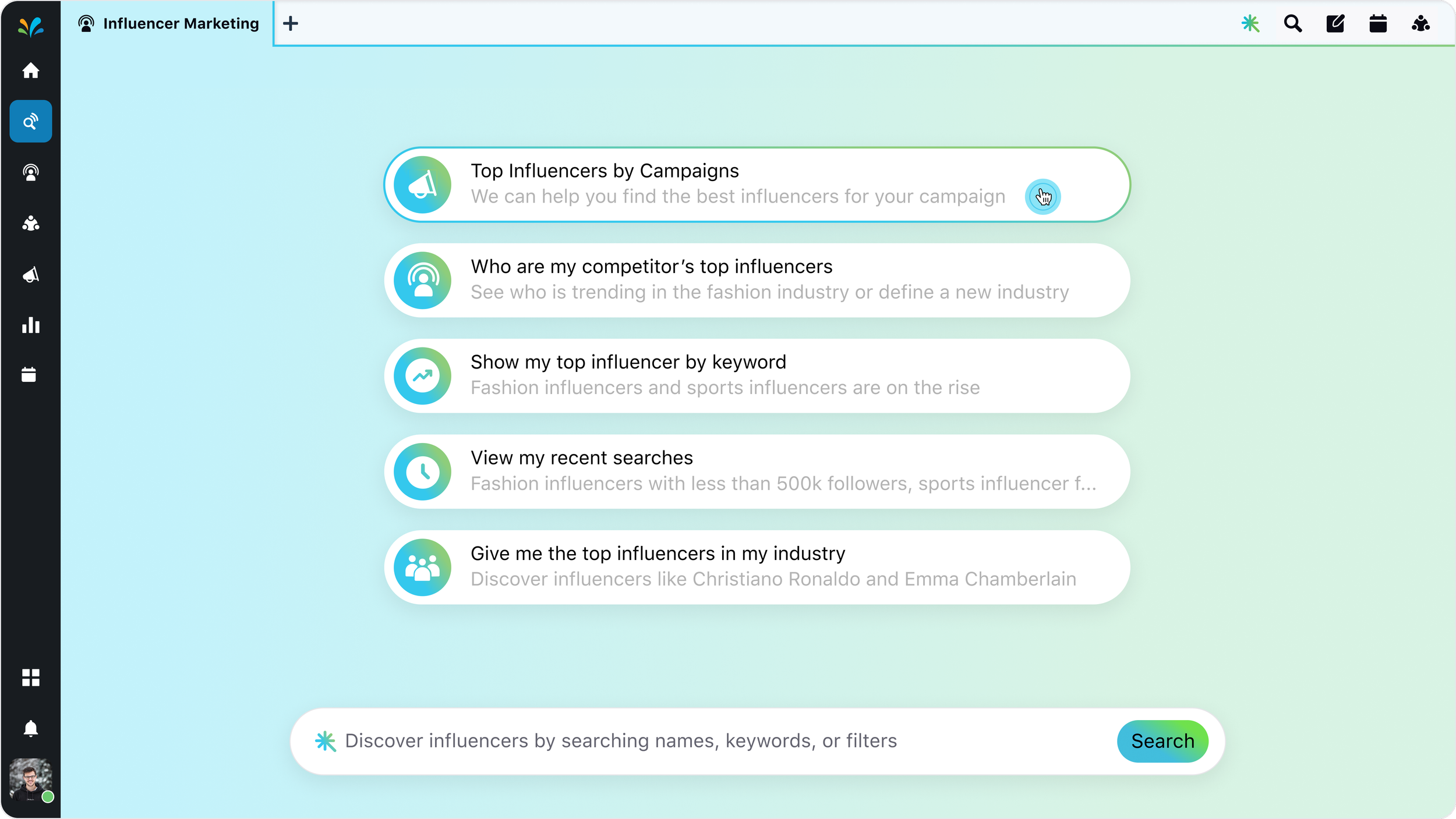
I helped define the product strategy and experience for a new influencer discovery platform, exploring how structured search and conversational AI could work together to help enterprise teams find the right creators. With no existing product or established patterns to build from, I took the experience from early concepts through beta, helping launch with three enterprise accounts.
Team
Product, Engineering, AI, Design Leadership, QA
Responsibilities
UX Research, Prototyping, Design System, Dev Handoff
Timeline
6 Months
The work happened outside the platform
How it worked before
A brief lands with a brand team: a campaign, a market, an audience.
Someone searches the platforms by hand, or asks an agency for a list.
Candidates go into a spreadsheet with follower counts pasted in.
The shortlist is argued in a deck, then the spreadsheet is abandoned.
Constraints going in
No existing patterns. Nothing in the platform looked like creator discovery.
Unclear market. The category was young and competitors disagreed on the shape of the product.
Beta scope. Three accounts, one workflow, a fixed date.Uneven creator data.
Coverage and freshness varied by platform and by region.
Enterprise teams already ran influencer programs. They just ran them in spreadsheets, agency decks and creator DMs, with no shared record of who had been considered, who had been paid, or how a name had been chosen. The platform managed every other channel and was blind to this one.
How might we
How might we help enterprise teams quickly discover and evaluate influencers that fit their specific campaign needs?
Understanding the workflow before defining the product
Influencer Marketing Spreadsheets
Column by column. Which fields teams added themselves is the requirements doc nobody wrote.
Competitor Teardowns
Standalone creator platforms and suite modules, compared on how each one starts a search.
Campaign Brief Walkthroughs
From campaign brief to signed creator, timed, to find where the days actually went.
The first step was understanding what information marketers actually needed to make a decision.
Starting from a blank canvas meant there was no existing interface to critique or user flow to optimize. I focused first on understanding how influencer discovery happened in practice, examining the tools and artifacts teams already used to identify creators, compare options, and build shortlists.
These patterns helped me move from a broad idea of “influencer discovery” toward a clearer definition of the product experience we needed to build.
What The Research Changed
Three findings did real work. Each one closed off a direction I had assumed we would take.
Finding 1
Nobody starts with a filter
Practitioners started from a sentence; "skincare creators in Southeast Asia whose audience skews 25 to 34 and who have not worked with a competitor." Filters were how they narrowed a list, never how they made one.
The conversational entry stopped being an add-on feature and became the front door. Filters moved to the results side of the screen.
Finding 2
The decision is defended
Every team had to justify a shortlist to someone else: a brand lead, a client, legal. The subjective fit note existed because the numbers alone never carried the argument.
Comparison became a first-class surface with room for a human note, not a table you export. Sharing a shortlist was in scope for beta; campaign management was not.
Finding 3
Shortlists were redundant
Teams evaluated creators one at a time, so nobody noticed how much audience the finalists shared. In two of the spreadsheets, three of five shortlisted creators were reaching substantially the same people, paying three times for one audience.
The shortlist became a set to evaluate, not a list of individuals. Audience overlap between selected creators surfaces in the comparison view, and it is the one metric that only exists once more than one is selected.
Defining the MVP around what we could confidently ship
Technical feasibility limited what we could deliver for the first release.
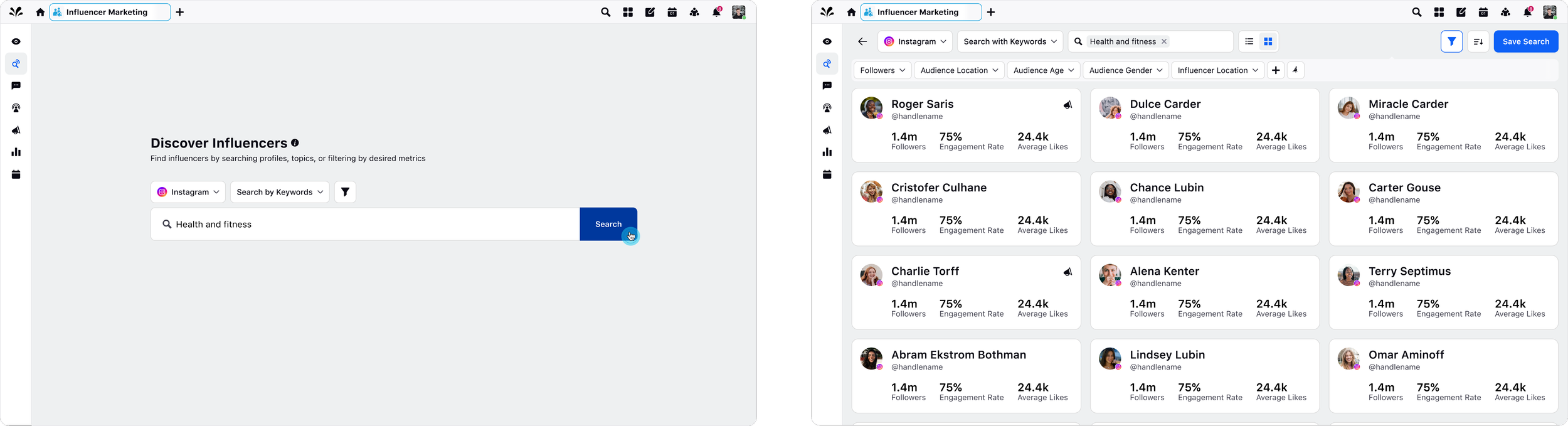
As we aligned with the product and engineering teams, it became clear that building a reliable conversational AI experience would require more engineering work than we could support within the initial timeline. Rather than delay the product, we agreed to launch with a focused MVP centered around standard search and filtering.
This meant temporarily stepping away from the conversational experience the design team envisioned, while still establishing the core discovery workflow. The MVP gave us a way to validate whether the underlying search experience helped marketers find relevant influencers before investing further in the more complex conversational layer.
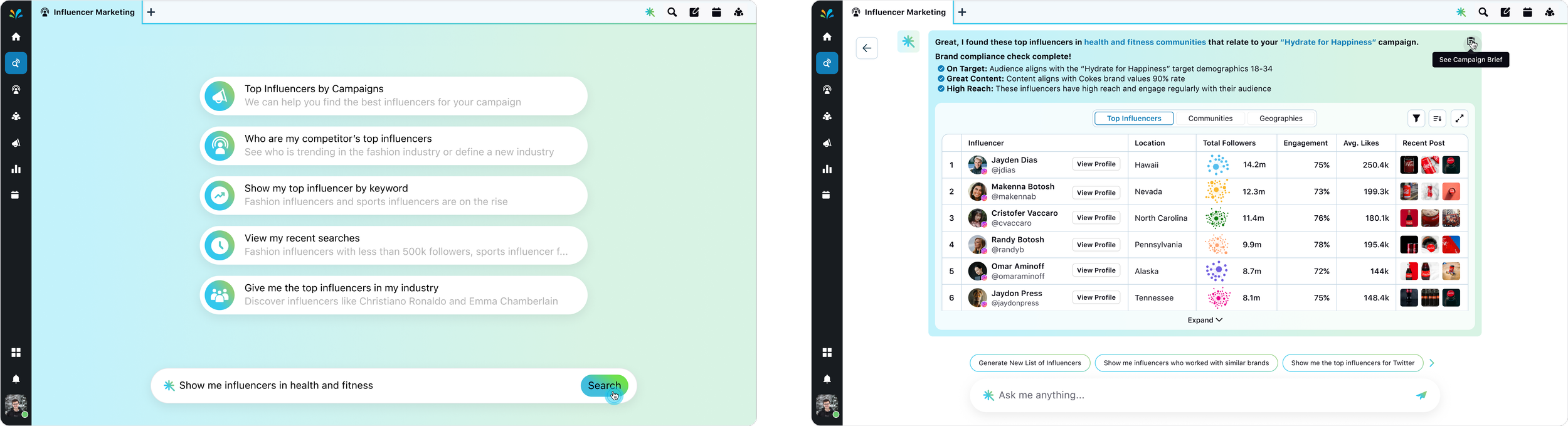
Conversational Experience
MVP
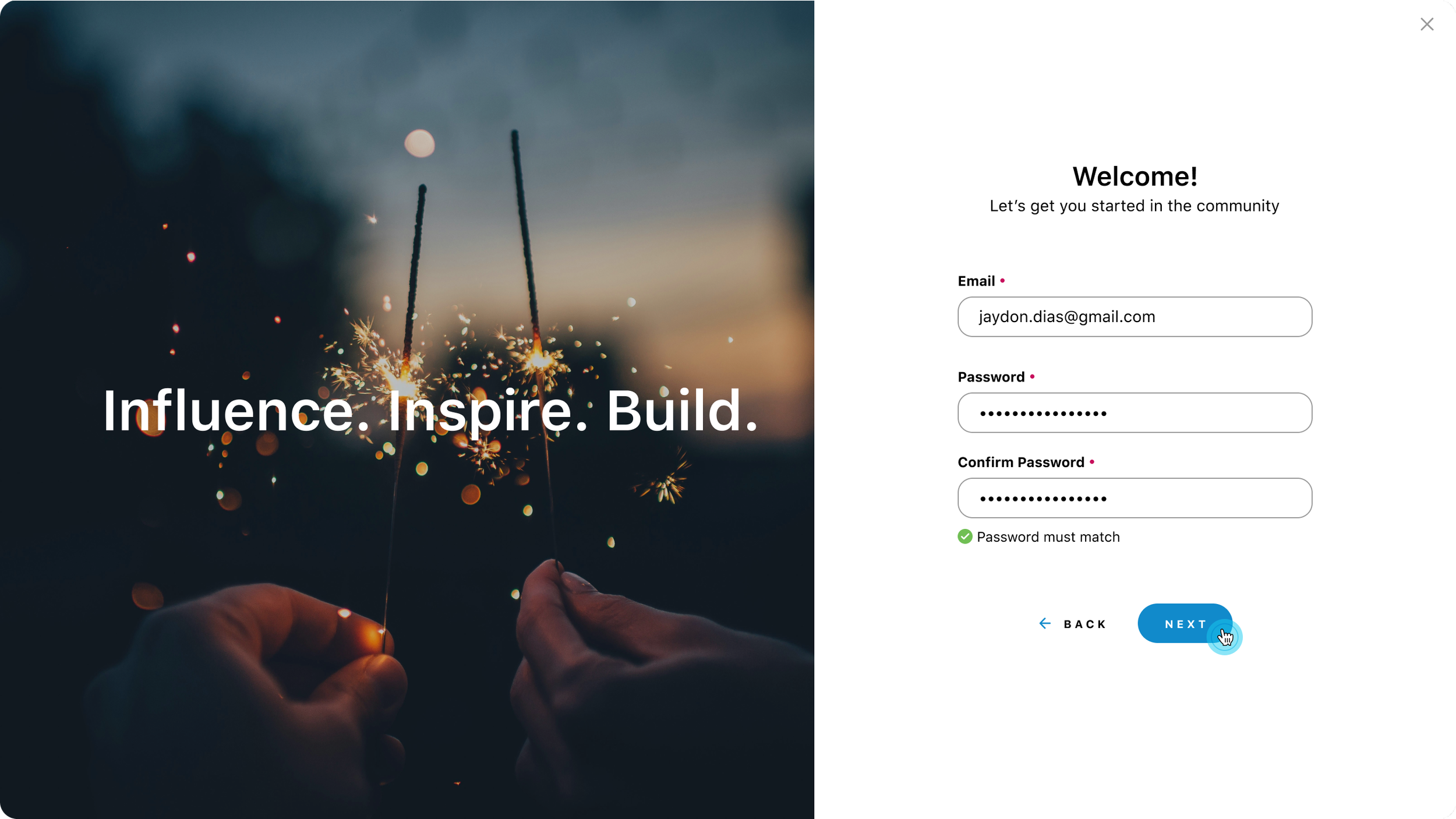
Getting Influencers Onboarded
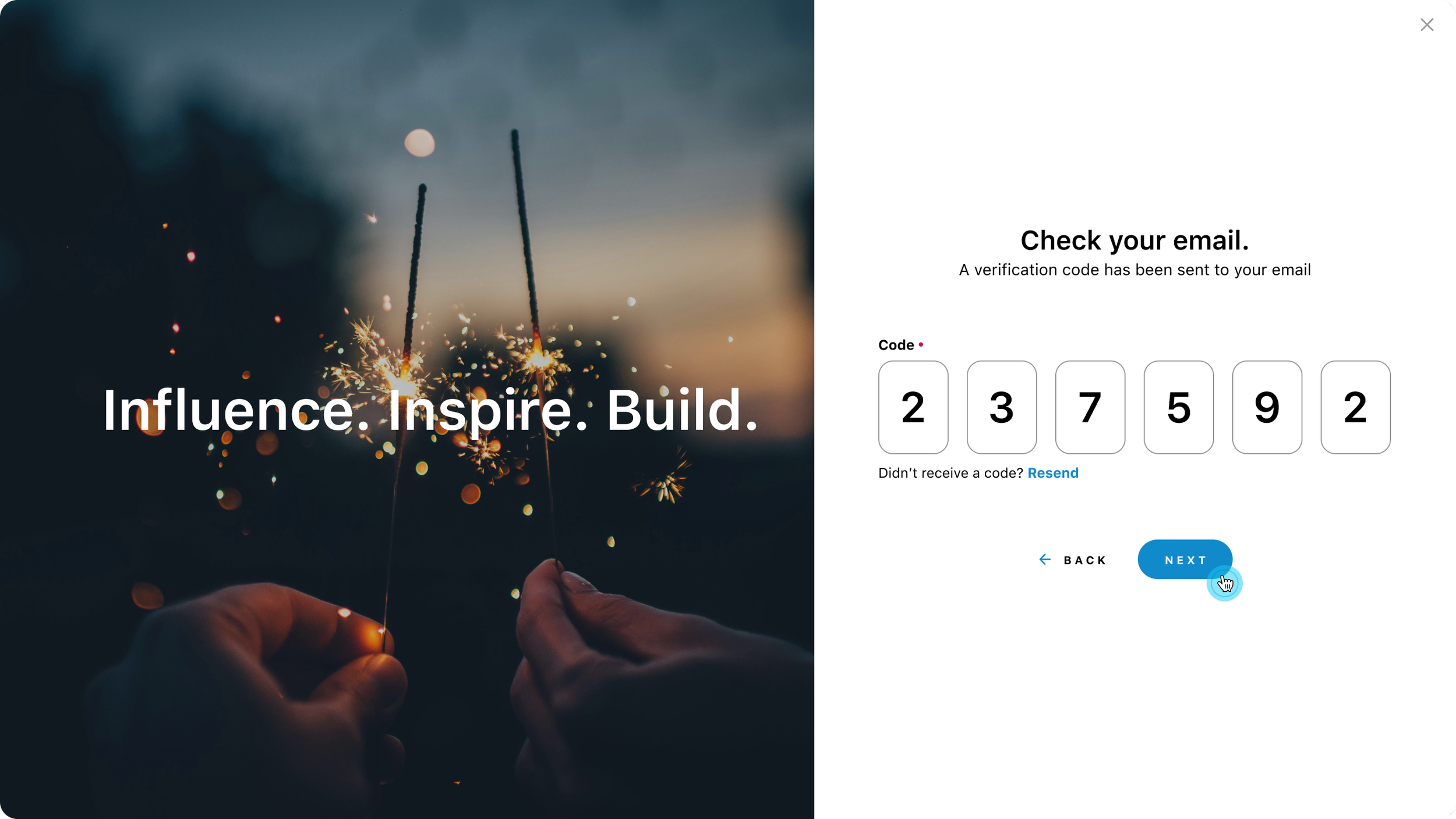
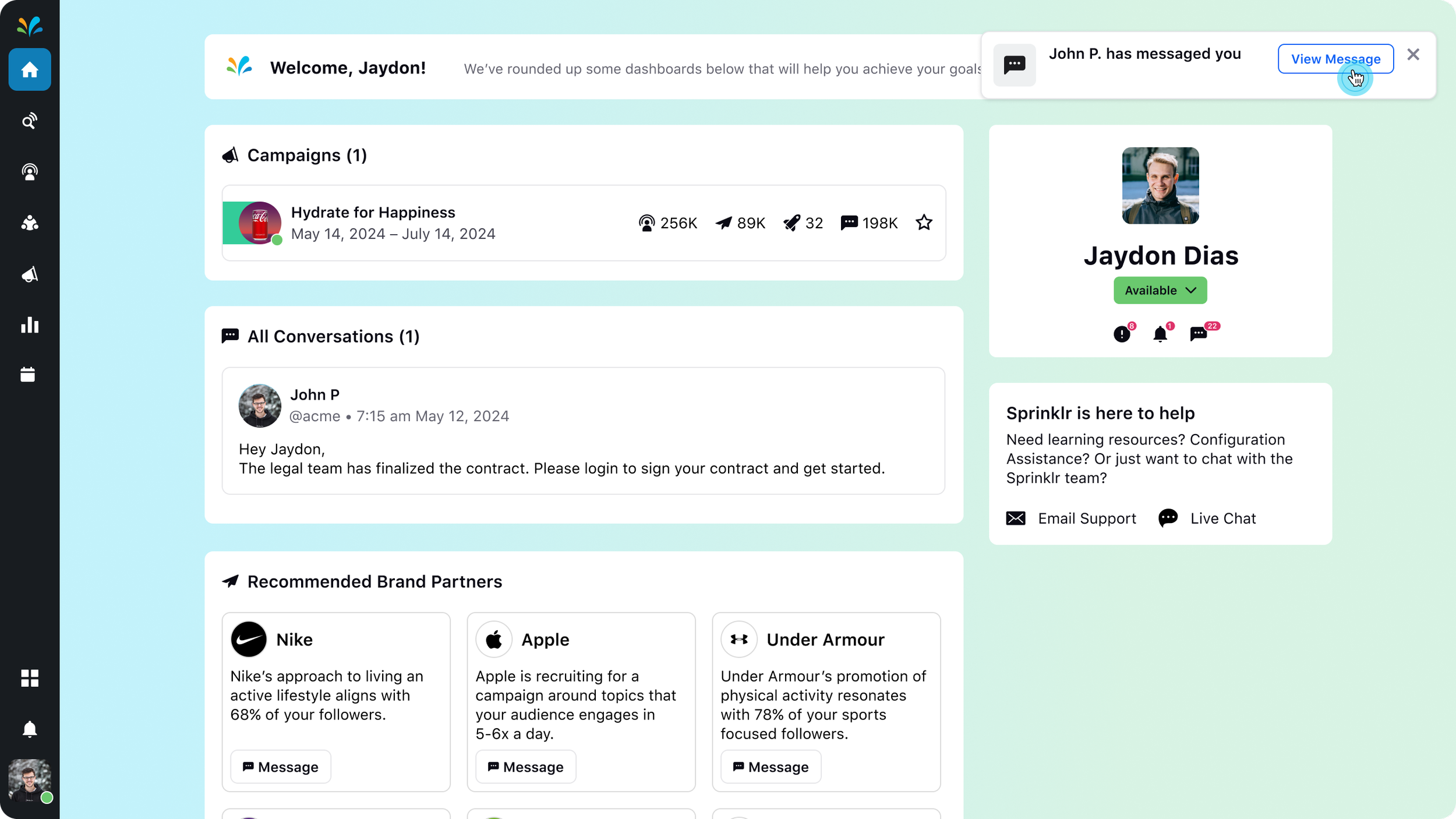
Campaign managers need to discover influencers, curate lists, add them to campaigns, and reach out to them. On the other hand, Influencers need to be able to sign up to the Sprinklr platform, sign any agreements, and manage their assigned campaigns. This is where onboarding became important on the influencer side, as we wanted this experience to be seamless for both campaign managers and influencers alike.
Designing Beyond The MVP
Although the initial product launched without conversation, the work established a foundation for how conversational AI could work across the platform. The MVP decision did not mean abandoning the conversational direction. In parallel, I explored what a conversational influencer discovery experience could look like and how users might interact with AI to find and evaluate influencers.

This work became an opportunity to think beyond a single product. I developed interaction patterns for conversational search, including how users could refine requests, understand AI-generated results, and move between conversation and structured product experiences. While these designs were not part of the initial launch, the patterns and thinking helped shape the broader direction of conversational experiences across the platform. The work became a foundation for future AI initiatives rather than a solution limited to one MVP.
Shipping the MVP while shaping what came next
The conversational concepts I explored helped expand our thinking around how AI could work across the broader platform. The work established patterns for conversational search, refining requests, presenting AI-generated results, and connecting conversation with structured workflows.
Ultimately, the product was put on hold after engineering uncovered higher-than-expected API costs associated with the experience. While the product itself did not progress beyond the beta, the project still moved the platform forward by validating an MVP with customers and contributing new patterns for how we could approach conversational AI in future products.
The MVP reached three beta accounts while the conversational work established patterns for the future of AI on the platform.
What This Project Taught Me
Building a new product from the ground up taught me that good product design is often about knowing when to push the vision forward and when to adapt to what can realistically be built. The conversational experience represented where we wanted the product to go, while the MVP gave us a practical way to start validating the core workflow with real customers.
It also changed how I think about designing AI experiences. The most valuable work was not limited to what shipped in the MVP. Exploring the conversational model helped establish patterns that could extend beyond influencer discovery and shape how AI could work across the broader platform.
Ultimately, the project reinforced the importance of designing for both the product in front of you and the opportunities that come next.